

COSIGN Her: Akilah Wallace | Don’t Start a Nonprofit in 2026—Unless You’re Ready to Run a BusinesS
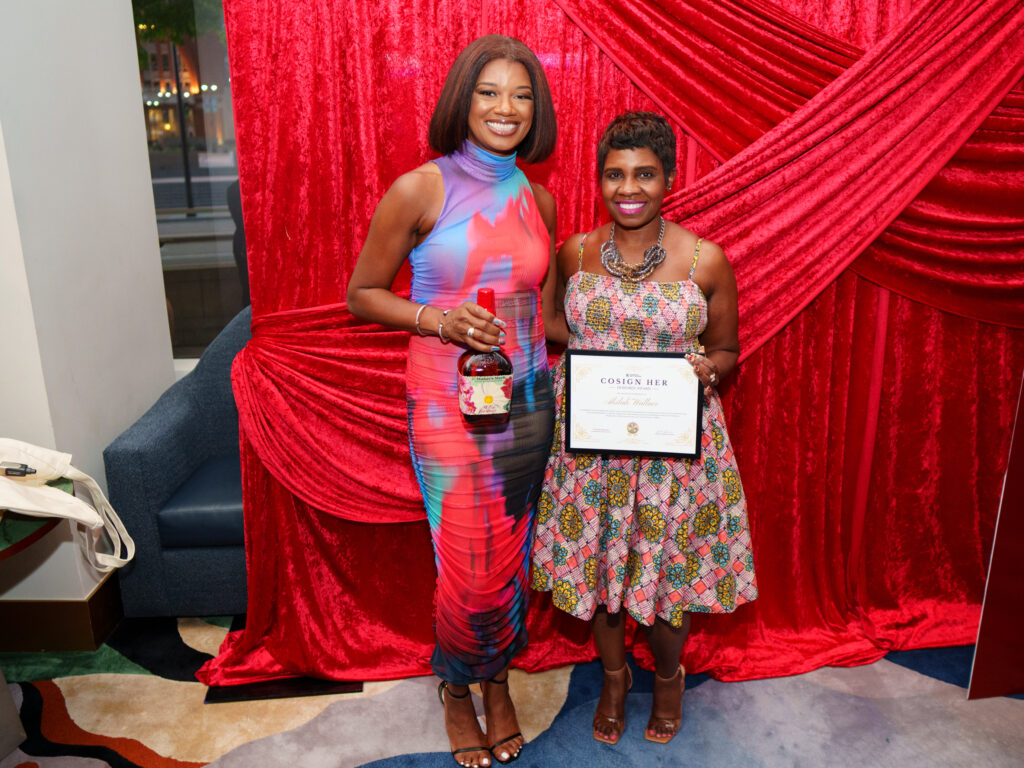
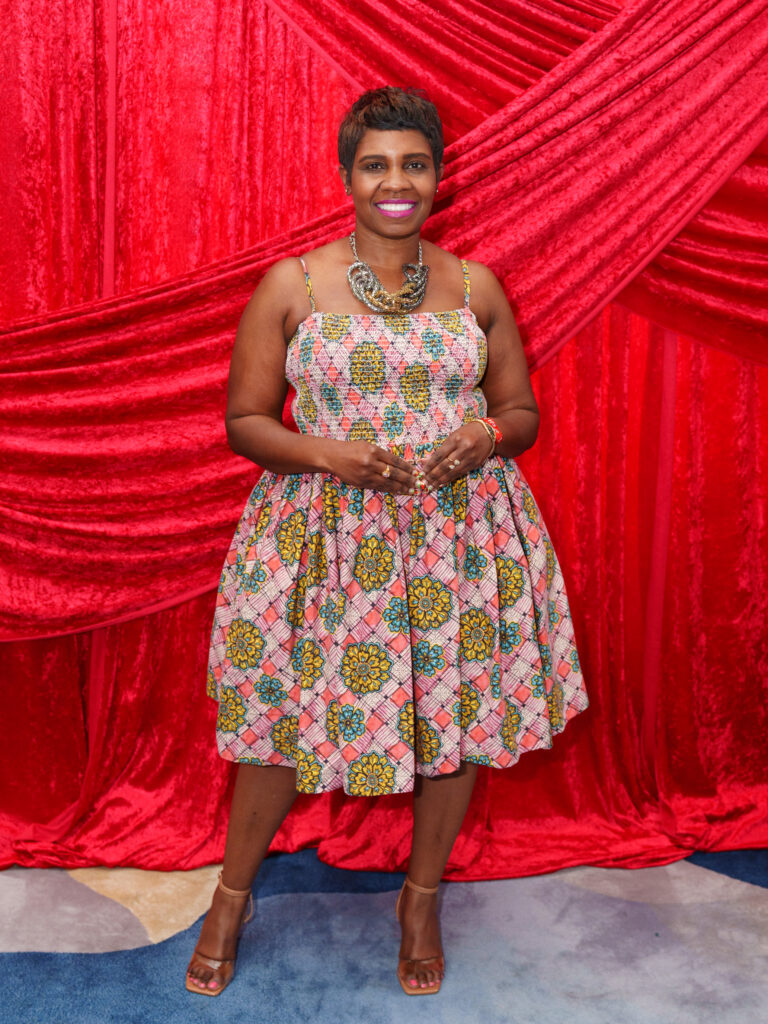
Akilah Wallace doesn’t say it to be provocative. She says it because she’s watched too many well-intentioned leaders burn out, too many boards built like family reunions, and too many “mission-driven” visions collapse under the weight of poor planning. And in a moment where funding is tightening, language is being policed, and organizations are being forced to defend the very communities they serve, her message lands with the kind of clarity that cuts through noise.
When Akilah—principal consultant and founder of Taylor Wallace Consulting—sits down for COSIGN Conversations, she brings a rare kind of energy to the nonprofit conversation: not cynical, not detached, but grounded. She speaks like someone who loves the work too much to let people treat it casually. Her career has been built in the rooms where missions become budgets, where board members either become strategic assets—or silent liabilities—and where a compelling story still isn’t enough if the numbers don’t match.
The interview opens the way a lot of entrepreneur conversations do these days: tired. Not “I need sleep” tired—life tired. The kind of exhaustion that comes from building while carrying everything else. The host admits he’s running on fumes, chasing timelines across multiple businesses, trying to figure out how to “schedule rest” without feeling like he’s falling behind. Akilah doesn’t romanticize the grind. She warns him with the calm certainty of someone who’s seen what happens when you don’t listen to your body.
“Life comes at you fast,” she tells him, and if you don’t build restoration into your life intentionally, your body will force you to. She says it like a fact, not an opinion.
Her own turning point wasn’t dramatic in the way people like to tell success stories. It was quieter—and more honest. A career shift created space. Not just time off, but space to reflect. Space to sit with herself. Space to recognize a truth that can hide behind achievement: you can be successful and still look unhappy. She noticed it in photos. In the “memories” her phone surfaced—moments that should’ve felt joyful, but carried exhaustion in her face. She acknowledges something many leaders feel but rarely say: not everyone has the privilege to slow down, and she doesn’t take that lightly. But once she had the chance, she used it to reset her life.
That reset became a second wind. Therapy. Doctors. Supplements. Attention to the realities Black women carry—like iron and vitamin D deficiencies that quietly steal energy and clarity. And then, when she felt her mind clear and her body stabilize, she returned to her work with renewed fire.
That’s the kind of foundation she’s building Taylor Wallace Consulting on: not hustle, but sustainability. Not vibes, but infrastructure.
Akilah calls her firm a social impact consultancy—a “consultancy of one,” she jokes—but what she provides is bigger than a title. She supports nonprofit organizations, foundations, and leaders across local, state, and national landscapes, with specialties in fund development, board training, retreats, workshops, and leadership strategy. She’s been tapped by institutions like the National Benevolent Association to lead trainings for cohorts of nonprofit executives—many of whom are brilliant, overworked, underfunded, and expected to perform miracles.
And that’s where her philosophy becomes a mission: she wants nonprofits to stop operating like passion projects and start operating like the businesses they are.
Because the moment Akilah starts talking fundraising, she makes one thing clear: too many people want the “art” before they learn the “science.”
Most new founders want to know how to make the ask. What to say. How to win the grant. Who to email. But Akilah is looking at what’s underneath—the structure that makes any ask believable. Mission and vision. Strategic plan. Needs assessment. Clear data. Program design. Credible leadership. Board composition. Budget. Financial management systems. Proof of community buy-in.
In her world, fundraising isn’t magic. It’s math, trust, and readiness.
Then she drops the line that has become a rallying cry in her interviews: “Do not put your family members down as your founding board members.” She laughs, but she’s dead serious.
It’s not personal—it’s operational. A nonprofit board isn’t a group chat. It’s governance. It’s finance. It’s legal oversight. It’s strategy. Akilah talks about board matrices and skill mapping like she’s explaining survival, because she is. Education experience, marketing, legal, finance—these aren’t “nice-to-haves.” They are the backbone of credibility. She’s blunt about it: don’t make someone treasurer just because they’re loyal. Make them treasurer because they understand money.
That’s the through-line in everything she says: credibility wins. Not just in how you present yourself—but in how you’re built.
When founders tell her they want a million-dollar grant because they saw a corporation give a million dollars to someone else, her next question is simple: “How much do you actually need?” And when they can’t answer, the conversation stops right there. Because donors and funders will ask the same thing.
Fundraising, she reminds us, is ultimately about dollars. If your cousin asked to borrow money, you’d ask how much. Funders do the same. And if your number doesn’t match your plan, trust dies.
Then she adds another truth founders don’t like hearing: strangers don’t want to be first. Start with your inner circle. Show that someone has already invested in you. Demonstrate that people who know you trust you. Funders want momentum. Not desperation.
She also offers a pragmatic roadmap for finding funding contacts: corporations are usually searchable through “community giving,” “charitable,” “grant,” and “community outreach.” For banks, look for CRA departments. For foundations, be specific—don’t search “foundations in Texas,” search “foundations funding education in Dallas County” or “foundations supporting mental health in DFW.” She pushes specificity because specificity is strategy.
And then she pushes the conversation even further—past the usual grant-and-donor talk—into something nonprofit founders often ignore: earned income. Charging for services where appropriate. Ticketed events with small entry fees. Merchandise as revenue, not just giveaways. Not every nonprofit has to be free to be impactful. Sometimes a little “skin in the game” creates sustainability. The point is to stop relying on one funding lane and build a diversified revenue mix.
But the heart of the interview—the moment that turns this from business advice into a warning—arrives when the host asks her about the growing trend of people starting nonprofits for tax write-offs and clout.
Akilah doesn’t attack anyone. She simply asks: Why?
What is your motive? Your agenda? Your internal need? Is it ego? Is it control? Is it the desire to “own something” without realizing you don’t actually own a nonprofit?
Then she says the line that feels like a door closing—and opening at the same time:
If you want to give back, you can donate directly to organizations that already exist. You can get the write-offs without building an entire institution. And if you feel that itch to serve, go volunteer first.
Because the truth is: Texas already has tens of thousands of registered 501(c)(3)s. We don’t necessarily need more. What we need is people showing up for the ones already doing the work.
Akilah’s perspective doesn’t come from theory. It comes from watching what’s happening right now: funding shifts tied to DEI backlash, pressure on organizations to adjust language, a tightening climate where certain causes are becoming targets. She acknowledges there are funders doubling down—refusing to be intimidated. But she also recognizes the real-life leadership decisions happening behind the scenes: do we stick to our language and risk losing critical dollars, or do we adjust the narrative to keep the lights on and protect staff jobs?
Her tone doesn’t shame people for navigating reality. She simply insists they navigate it intelligently.
And if there’s one “don’t” she repeats with urgency, it’s this: don’t falsify your budgets or numbers. Don’t chase money tied to deliverables you don’t currently do just because the funding looks attractive. Don’t craft fake programs to fit a grant. That’s how nonprofits lose credibility, create reporting nightmares, and burn through trust they can’t afford to lose. She wants organizations to invest in sound financial systems—QuickBooks, bookkeeping, accountability—because messy numbers will lock doors long before your mission ever gets a chance to speak.
Toward the end of the interview, the conversation shifts from critique to celebration. Taylor Wallace Consulting is sponsoring COSIGN Awards’ Nonprofit of the Year, and Akilah shares organizations she respects—some large and established, others grassroots and community-rooted: Interfaith Family Services, Metrocare, Carter’s House, Soul Reborn/Soul Theater, and more. She’s careful not to reduce success to size. For her, “doing it right” looks like strong leadership, a functioning board, healthy operations, financial stewardship, and a volunteer base that’s engaged beyond appearances.
When asked what she’s most passionate about, her answer is honest and consistent with everything she’s said: she wants people cared for. And at the center of that care, she’s especially invested in Black women and girls—because she sees how much society rests on their backs, how often they pour without being refilled, and how urgently they deserve protection and support.
That’s what makes Akilah Wallace’s message feel bigger than fundraising advice. She isn’t just teaching nonprofits how to raise money. She’s teaching leaders how to stop treating impact like a hobby. She’s building a culture where purpose is matched with preparation, and where legacy isn’t just what you want to do—it’s what you have the structure to sustain.
In 2026, that distinction might be the difference between a nonprofit that gets attention… and one that actually changes lives.
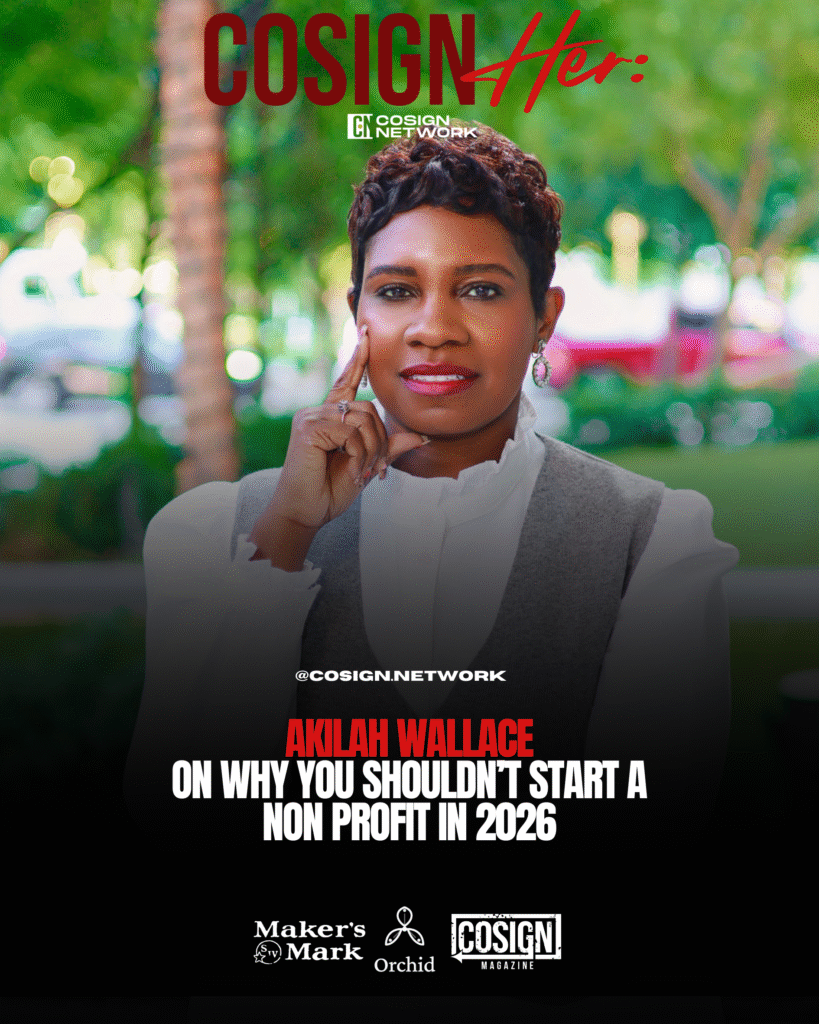
This feature is part of the COSIGN Her series, in partnership with Maker’s Mark, honoring 17 women who are making their mark and leading the next era.
This article is also powered by Orchid — where women don’t compete, we compound. Join a private, intelligent network built for ambitious women to grow, connect, and build real momentum. Request your invite at https://www.orchidonline.co and use code #COSIGN2026