
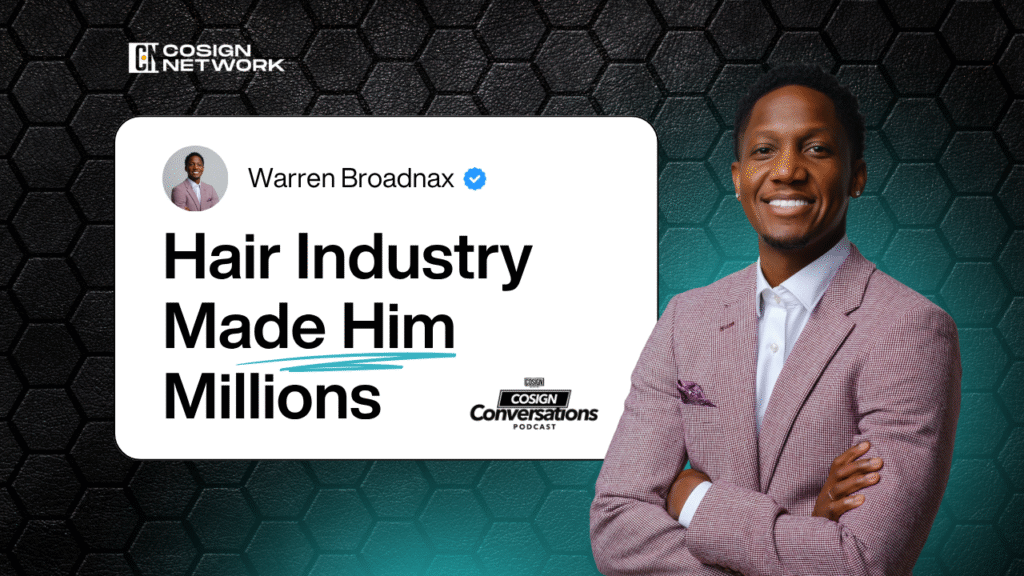
From $900 to Multi-Million Dollar Brand: The Real Story of She’s Happy Hair
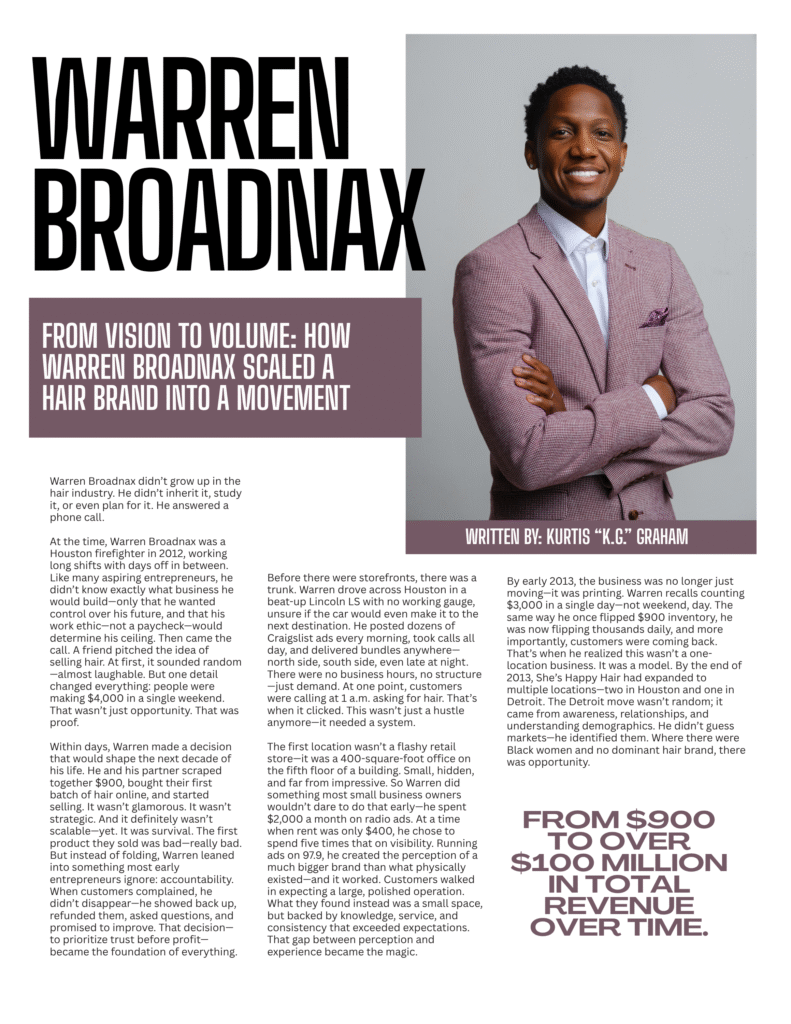
Warren Broadnax didn’t grow up in the hair industry. He didn’t inherit it, study it, or even plan for it. He answered a phone call.
At the time, Warren Broadnax was a Houston firefighter in 2012, working long shifts with days off in between. Like many aspiring entrepreneurs, he didn’t know exactly what business he would build—only that he wanted control over his future, and that his work ethic—not a paycheck—would determine his ceiling. Then came the call. A friend pitched the idea of selling hair. At first, it sounded random—almost laughable. But one detail changed everything: people were making $4,000 in a single weekend. That wasn’t just opportunity. That was proof.
Within days, Warren made a decision that would shape the next decade of his life. He and his partner scraped together $900, bought their first batch of hair online, and started selling. It wasn’t glamorous. It wasn’t strategic. And it definitely wasn’t scalable—yet. It was survival. The first product they sold was bad—really bad. But instead of folding, Warren leaned into something most early entrepreneurs ignore: accountability. When customers complained, he didn’t disappear—he showed back up, refunded them, asked questions, and promised to improve. That decision—to prioritize trust before profit—became the foundation of everything.
Before there were storefronts, there was a trunk. Warren drove across Houston in a beat-up Lincoln LS with no working gauge, unsure if the car would even make it to the next destination. He posted dozens of Craigslist ads every morning, took calls all day, and delivered bundles anywhere—north side, south side, even late at night. There were no business hours, no structure—just demand. At one point, customers were calling at 1 a.m. asking for hair. That’s when it clicked. This wasn’t just a hustle anymore—it needed a system.
The first location wasn’t a flashy retail store—it was a 400-square-foot office on the fifth floor of a building. Small, hidden, and far from impressive. So Warren did something most small business owners wouldn’t dare to do that early—he spent $2,000 a month on radio ads. At a time when rent was only $400, he chose to spend five times that on visibility. Running ads on 97.9, he created the perception of a much bigger brand than what physically existed—and it worked. Customers walked in expecting a large, polished operation. What they found instead was a small space, but backed by knowledge, service, and consistency that exceeded expectations. That gap between perception and experience became the magic.
By early 2013, the business was no longer just moving—it was printing. Warren recalls counting $3,000 in a single day—not weekend, day. The same way he once flipped $900 inventory, he was now flipping thousands daily, and more importantly, customers were coming back. That’s when he realized this wasn’t a one-location business. It was a model. By the end of 2013, She’s Happy Hair had expanded to multiple locations—two in Houston and one in Detroit. The Detroit move wasn’t random; it came from awareness, relationships, and understanding demographics. He didn’t guess markets—he identified them. Where there were Black women and no dominant hair brand, there was opportunity.
Expansion wasn’t fueled by outside capital—it was self-funded. Every dollar made went back into the business: inventory, locations, marketing. That discipline took the company from $900 to over $100 million in total revenue over time. But the growth wasn’t clean. It came with mistakes—especially in people. As Warren scaled into new cities, he partnered with individuals to run locations. On paper, it made sense. In reality, it exposed a harsh truth: not everyone deserves access to your vision. He admits to giving away equity too freely, driven by loyalty and the desire to “put his people on.” But without alignment, accountability, or shared standards, those decisions cost him—not just financially, but mentally and emotionally.
At its peak around 2017–2018, the company was generating roughly $18 million annually across multiple markets—seven locations, eight markets, national momentum. But even then, new challenges emerged. Scaling meant managing people, protecting product quality, and maintaining culture across locations. It meant understanding financials at a deeper level—cash flow, balance sheets, operational oversight—and making harder decisions, faster. Warren learned that building a business isn’t just about growth—it’s about control: control of standards, control of brand, and control of who’s allowed to represent what you built.
At the same time, he was doubling down on marketing. This wasn’t a brand built quietly. Between radio, street marketing, nightlife presence, and eventually television ads, Warren invested heavily into visibility. At one point, he was spending around $30,000 a month on TV across multiple cities—long before social media ads became the norm. He understood something early: attention drives revenue, and he chased it relentlessly.
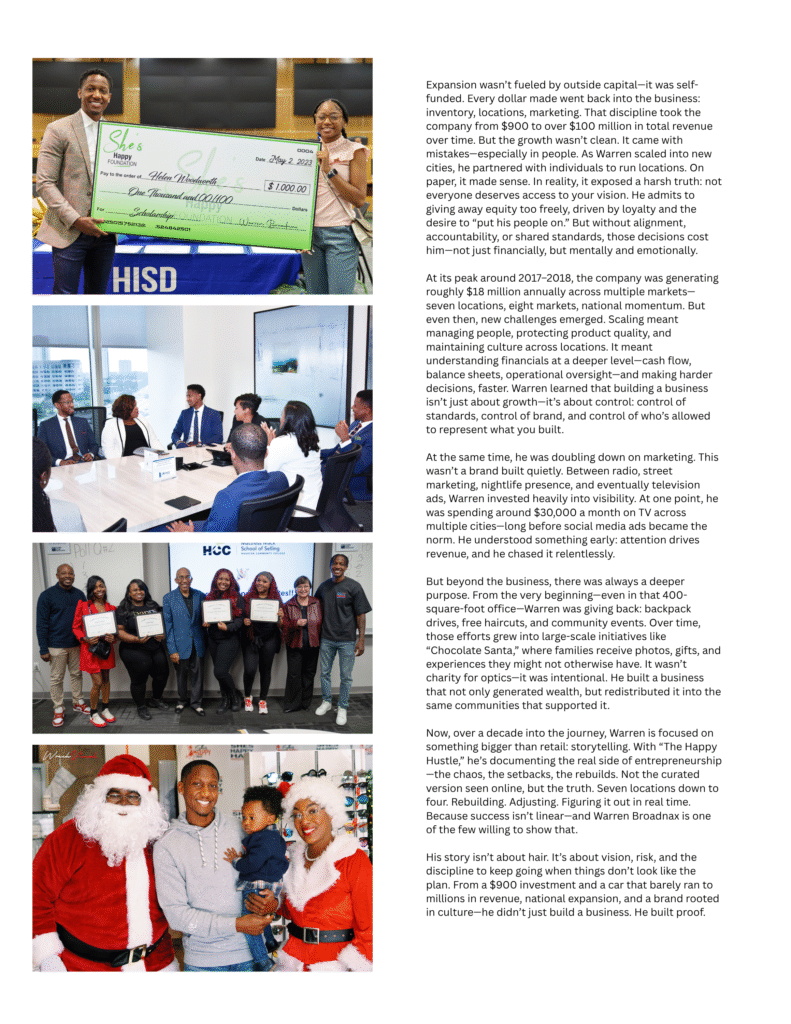
But beyond the business, there was always a deeper purpose. From the very beginning—even in that 400-square-foot office—Warren was giving back: backpack drives, free haircuts, and community events. Over time, those efforts grew into large-scale initiatives like “Chocolate Santa,” where families receive photos, gifts, and experiences they might not otherwise have. It wasn’t charity for optics—it was intentional. He built a business that not only generated wealth, but redistributed it into the same communities that supported it.
Now, over a decade into the journey, Warren is focused on something bigger than retail: storytelling. With “The Happy Hustle,” he’s documenting the real side of entrepreneurship—the chaos, the setbacks, the rebuilds. Not the curated version seen online, but the truth. Seven locations down to four. Rebuilding. Adjusting. Figuring it out in real time. Because success isn’t linear—and Warren Broadnax is one of the few willing to show that.
His story isn’t about hair. It’s about vision, risk, and the discipline to keep going when things don’t look like the plan. From a $900 investment and a car that barely ran to millions in revenue, national expansion, and a brand rooted in culture—he didn’t just build a business. He built proof.